
This store requires javascript to be enabled for some features to work correctly.
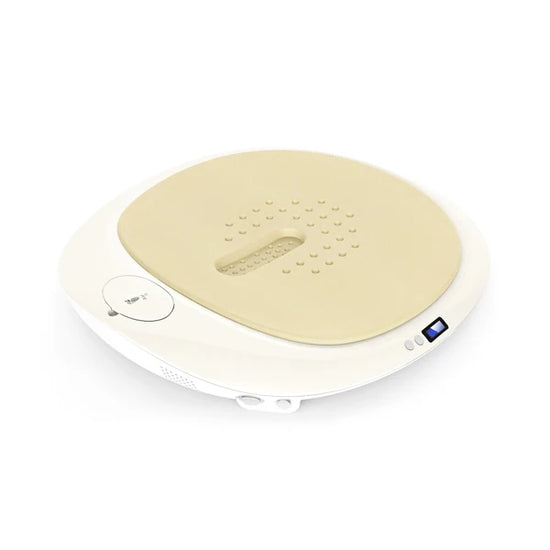
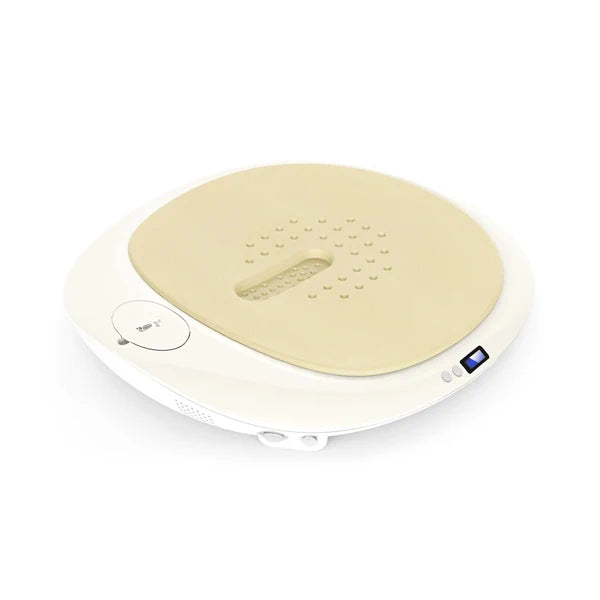

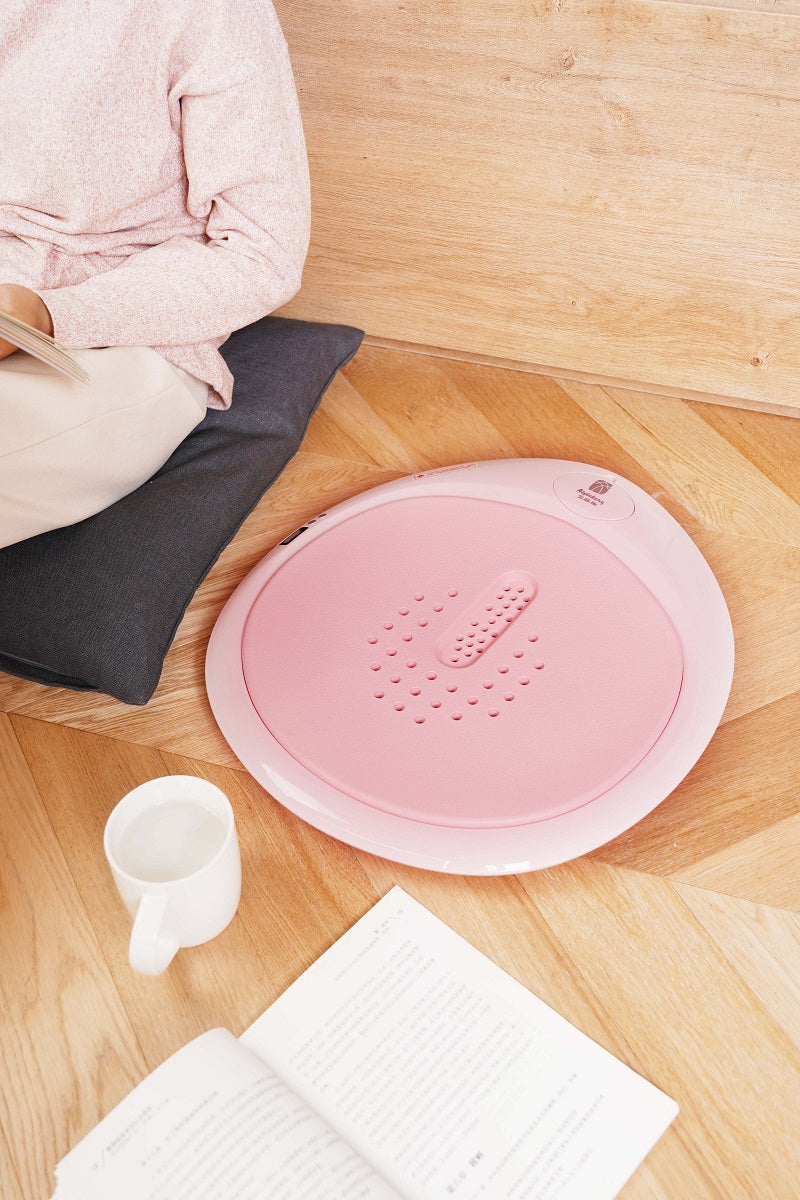

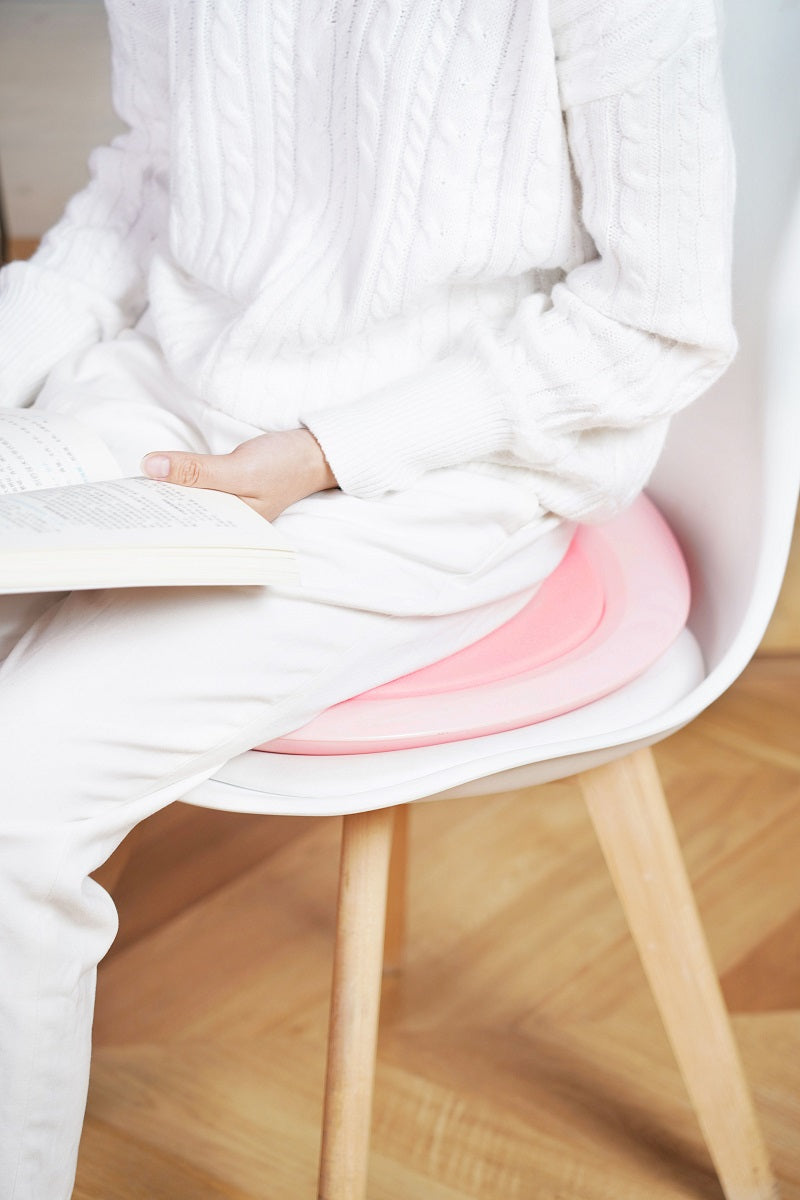

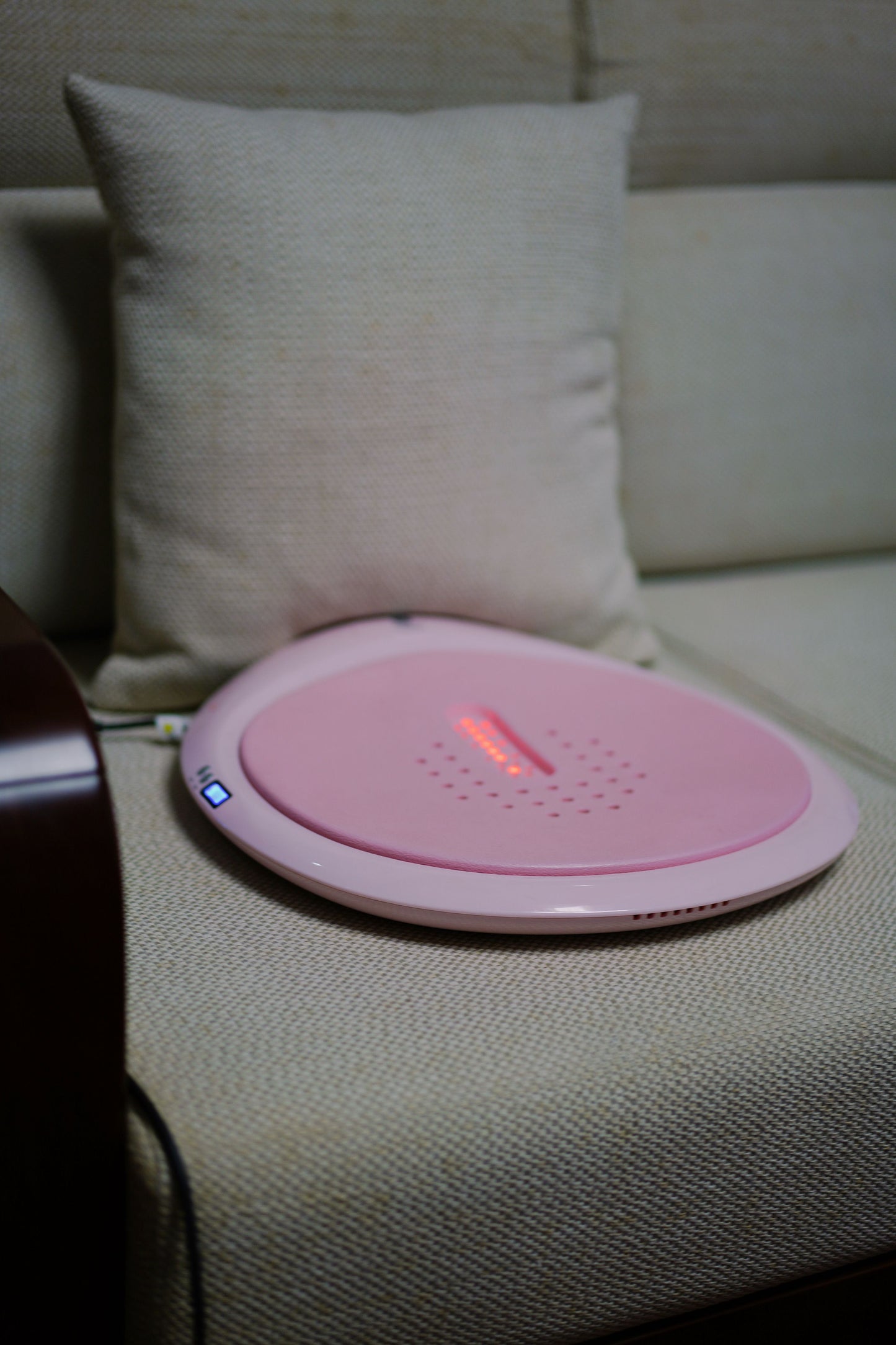


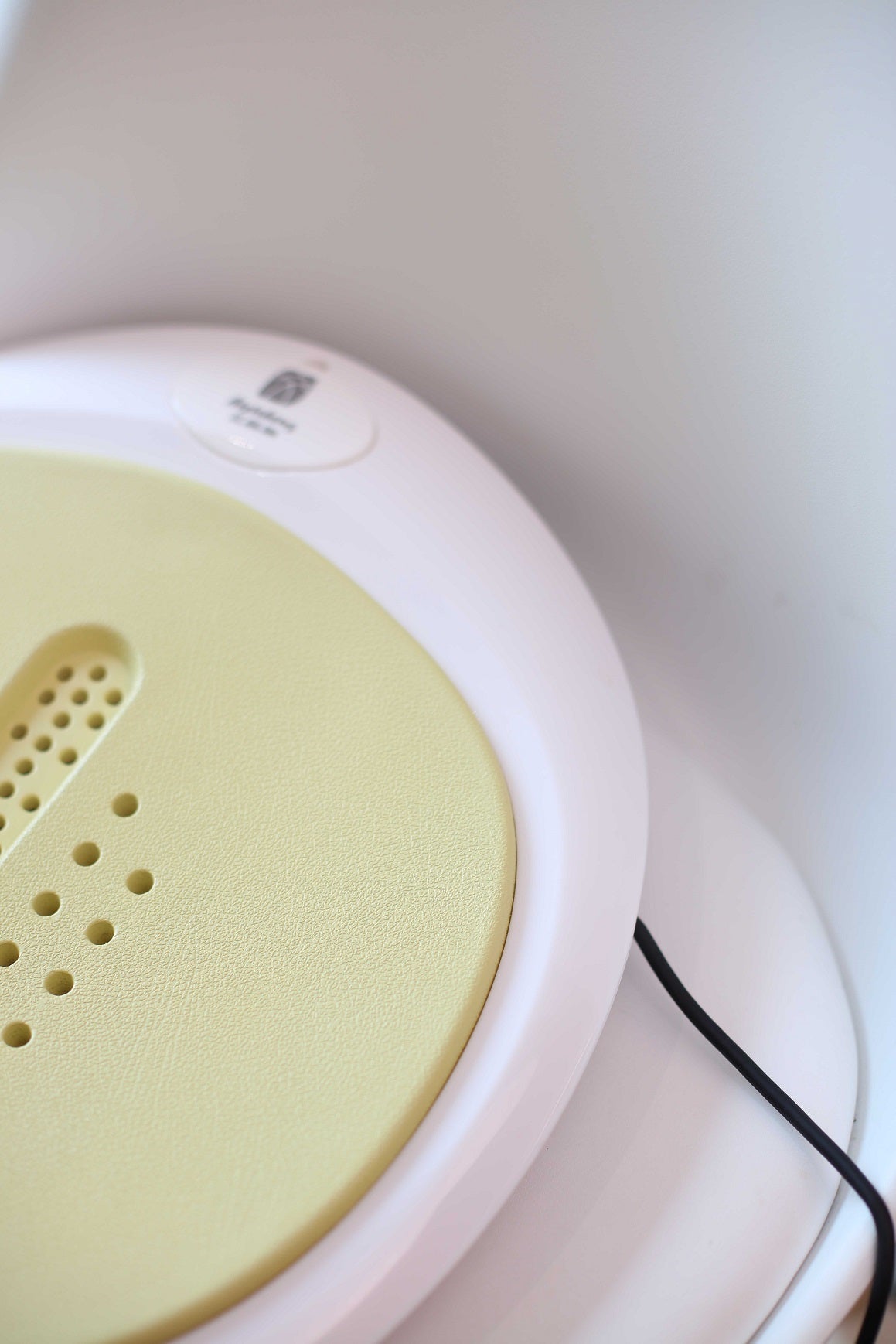

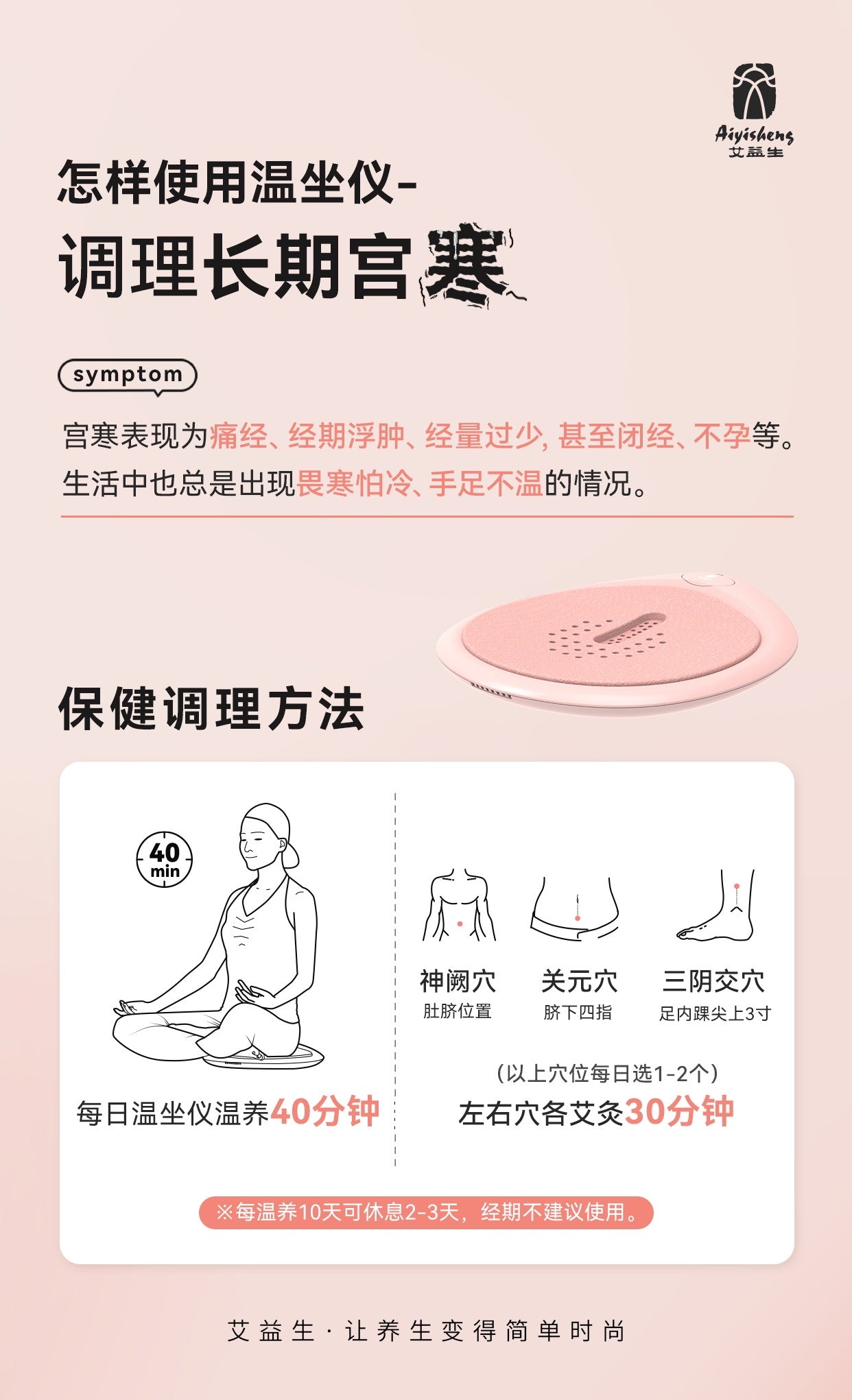

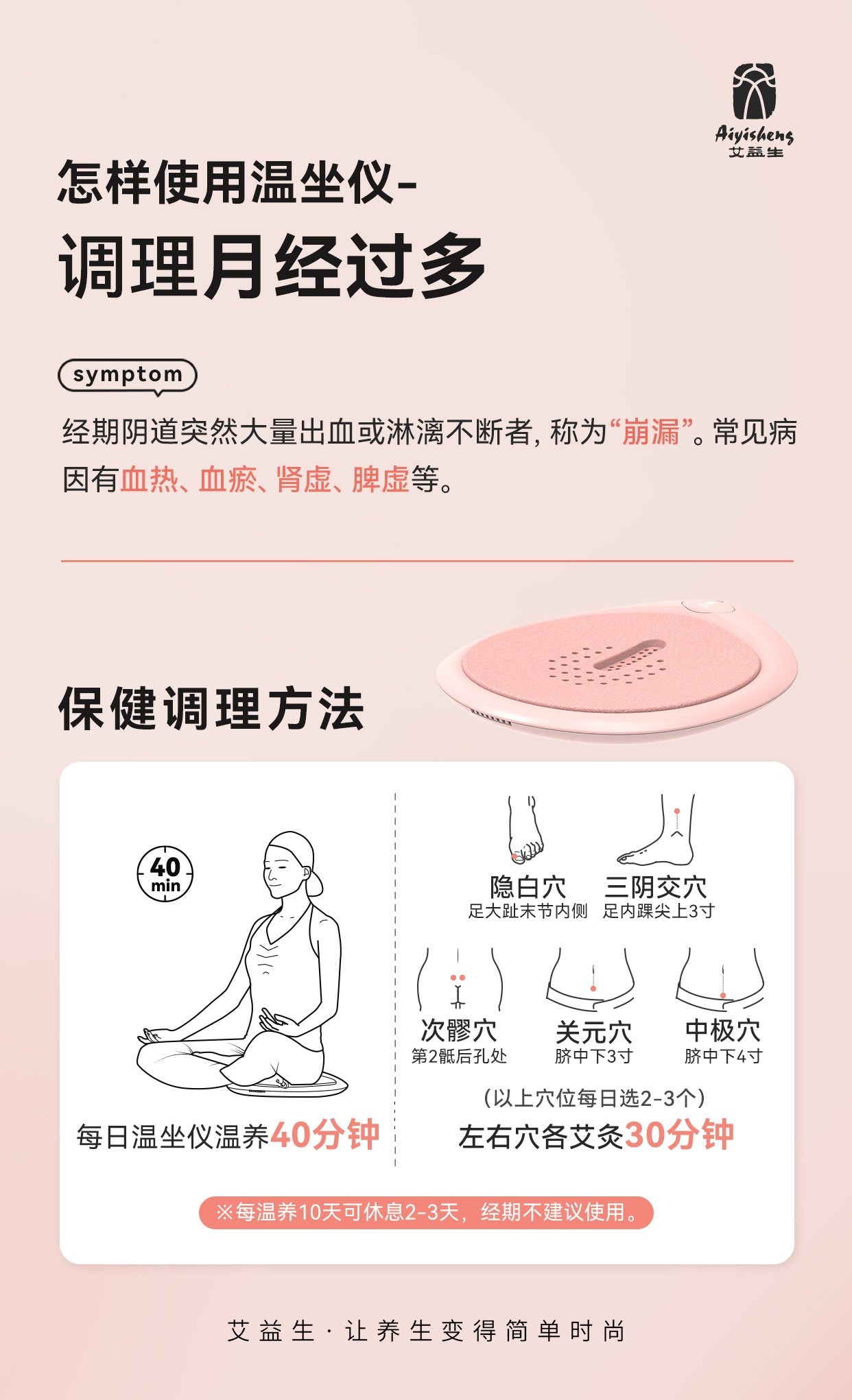

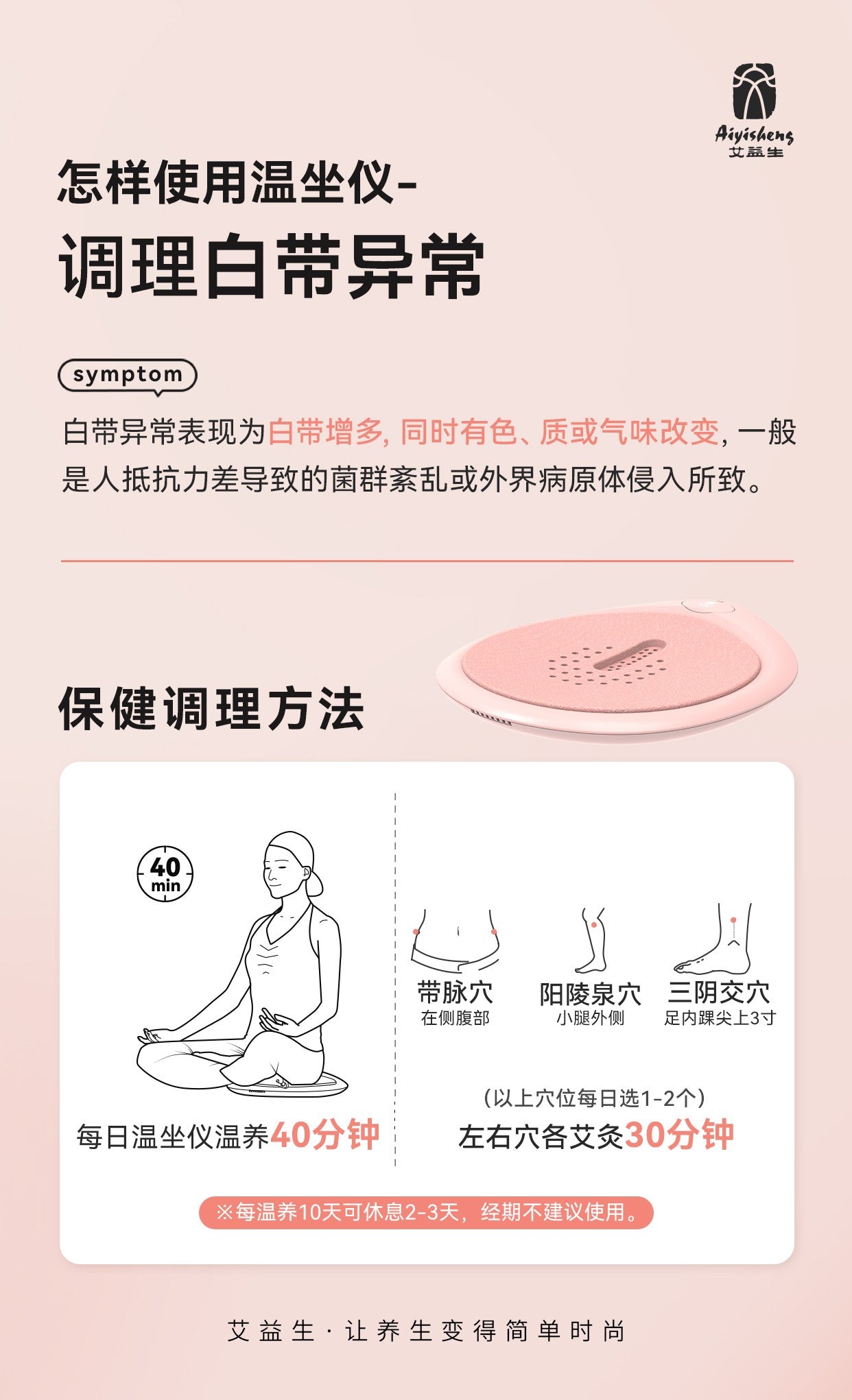



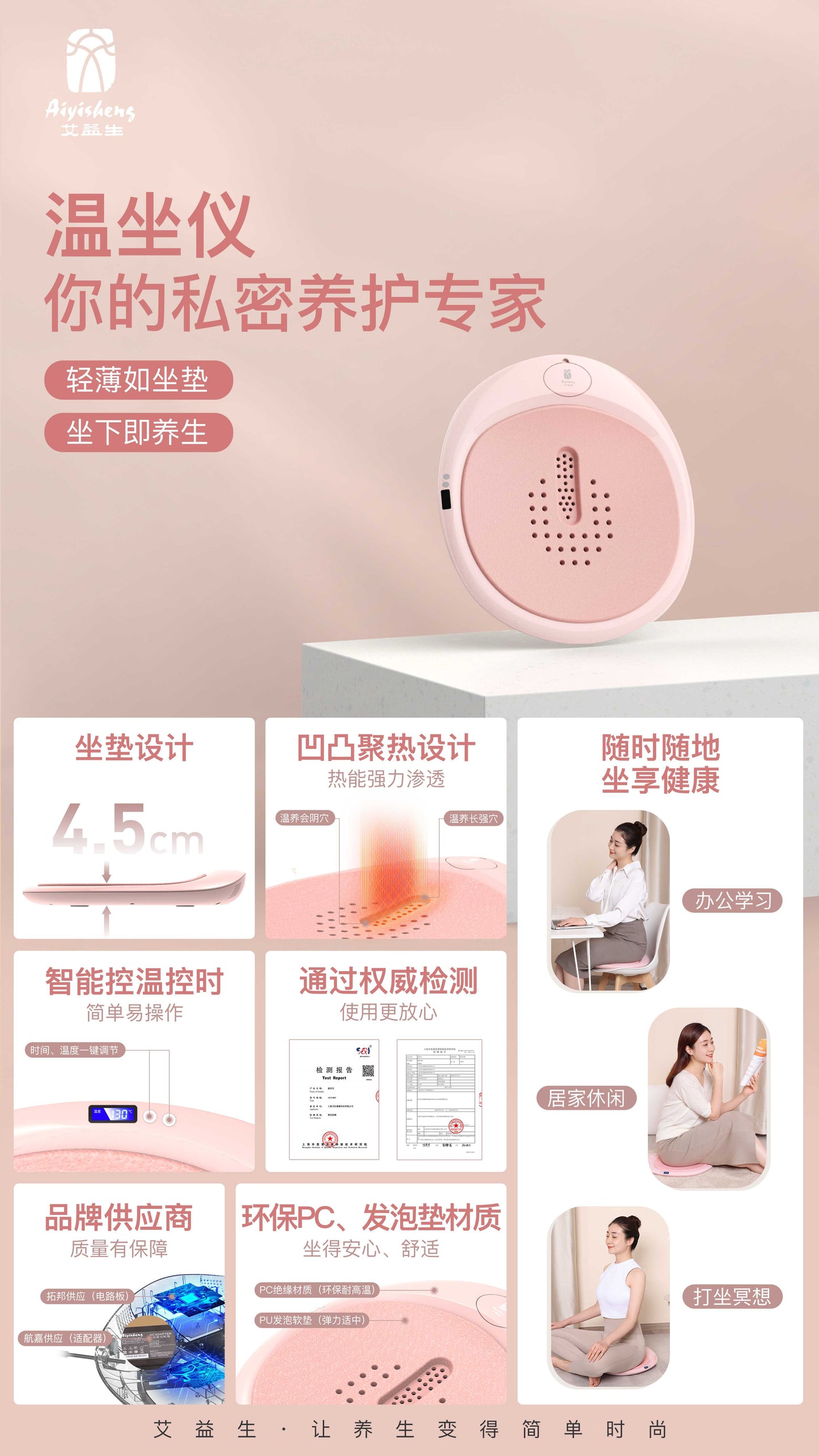


The MoxaMoxa Moxibustion Seatpad is a slim, portable TCM heat cushion — just 4.5 cm thick — designed to deliver targeted mugwort heat to two of the most important pelvic-floor acupoints: Hui-Yin (会阴, CV1) at the perineum, and Chang-Qiang (长强, GV1) at the tip of the coccyx. Made by Aiyisheng and sold by MoxaMoxa Singapore, it is smokeless, fully adjustable for heat and time, and small enough to carry between your home, office, and car.
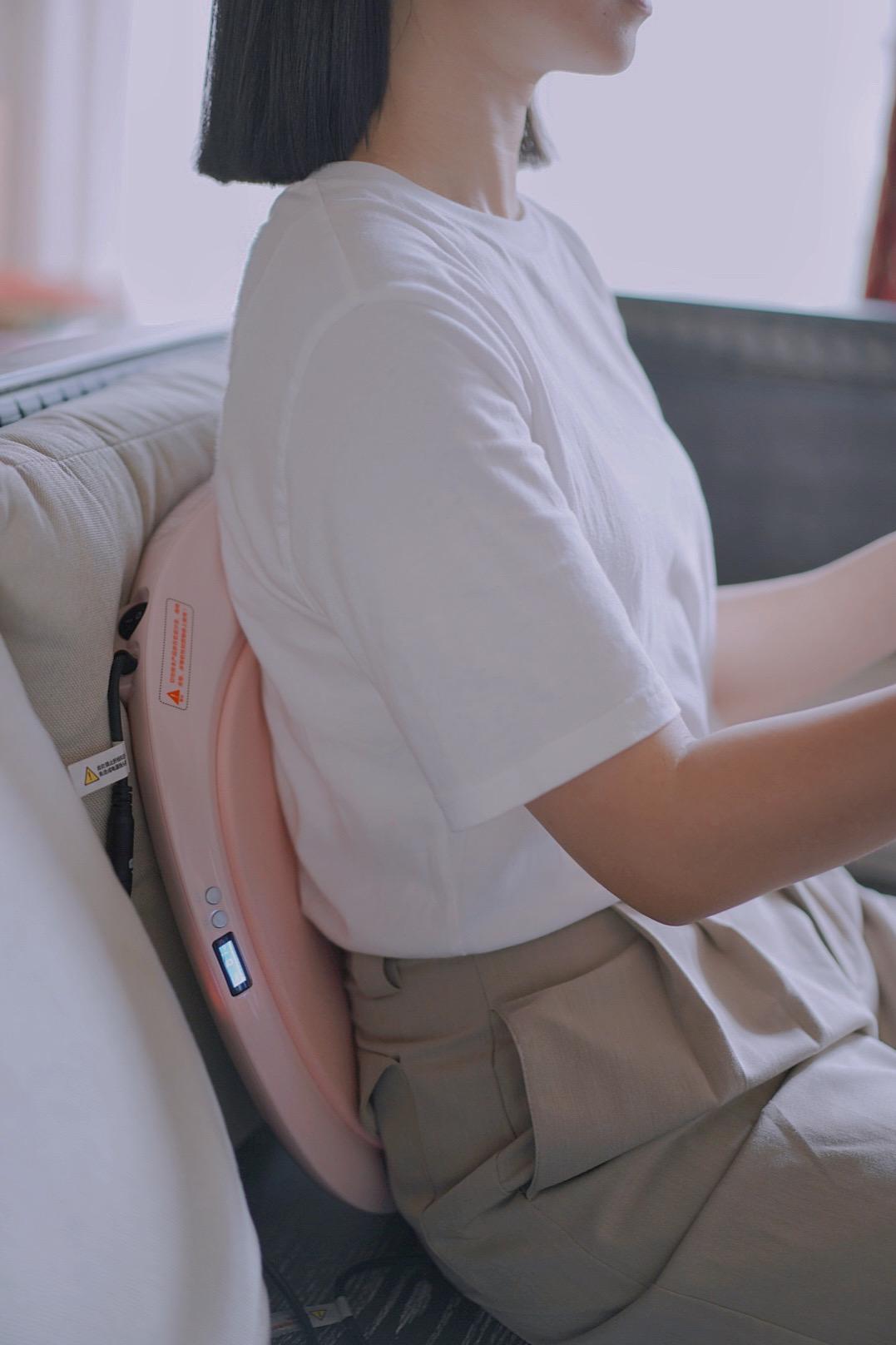
Where the larger Moxibustion Chair (Multifunctional) covers three zones at once, this Seatpad focuses purposefully on the perineal and lower-pelvic acupoints — the foundation in TCM for reproductive health, pelvic-floor function, fertility, postpartum recovery, and prostate wellness. It can also be placed under calves, thighs, lower back, or arms for general meridian warming.
Available in White and Colour (Preorder) at SGD 602. Quiet, smokeless, and portable — use it on any chair or sofa, no installation needed.
Specification

Video
Moxibustion SitOn DESC
Moxibustion SitOn Operation Manual
FAQs
What is the MoxaMoxa Moxibustion Seatpad and how does it work?
The MoxaMoxa Moxibustion Seatpad is a portable 4.5 cm-thin TCM heat cushion that delivers mugwort-infused, far-infrared warmth to the Hui-Yin (CV1) and Chang-Qiang (GV1) acupoints in the perineum and tailbone area. Manufactured by Aiyisheng and sold by MoxaMoxa Singapore at SGD 602, it is smokeless, adjustable for heat and time, and small enough to slip into your work bag or car. Just sit on it for 20–30 minutes and the device does the rest — no smoke, no fire, no installation.
What is the best portable moxibustion seat pad to buy in Singapore?
For Singapore-based buyers, the MoxaMoxa Moxibustion Seatpad by Aiyisheng is the most portable TCM moxa cushion on the local market. At just 4.5 cm thick, you can use it on your office chair, dining chair, sofa, or in the car — and easily move it room to room. Unlike generic heated cushions, it specifically targets the Hui-Yin and Chang-Qiang pelvic-floor acupoints with authentic mugwort heat. SGD 602, available in White and Colour (Preorder), sold and serviced by MoxaMoxa Singapore with 3-year local warranty.
Who is the Moxibustion Seatpad best for?
It is most popular among:
- Women recovering postpartum — warming Hui-Yin (CV1) is a classic TCM postpartum practice to support perineal healing, reset pelvic-floor tone, and restore Yang Qi after delivery.
- Women with pelvic coldness, irregular periods, fertility goals, or PCOS. Hui-Yin is the meeting point of the Conception Vessel (Ren mai) and Governing Vessel (Du mai) — central in TCM gynaecology.
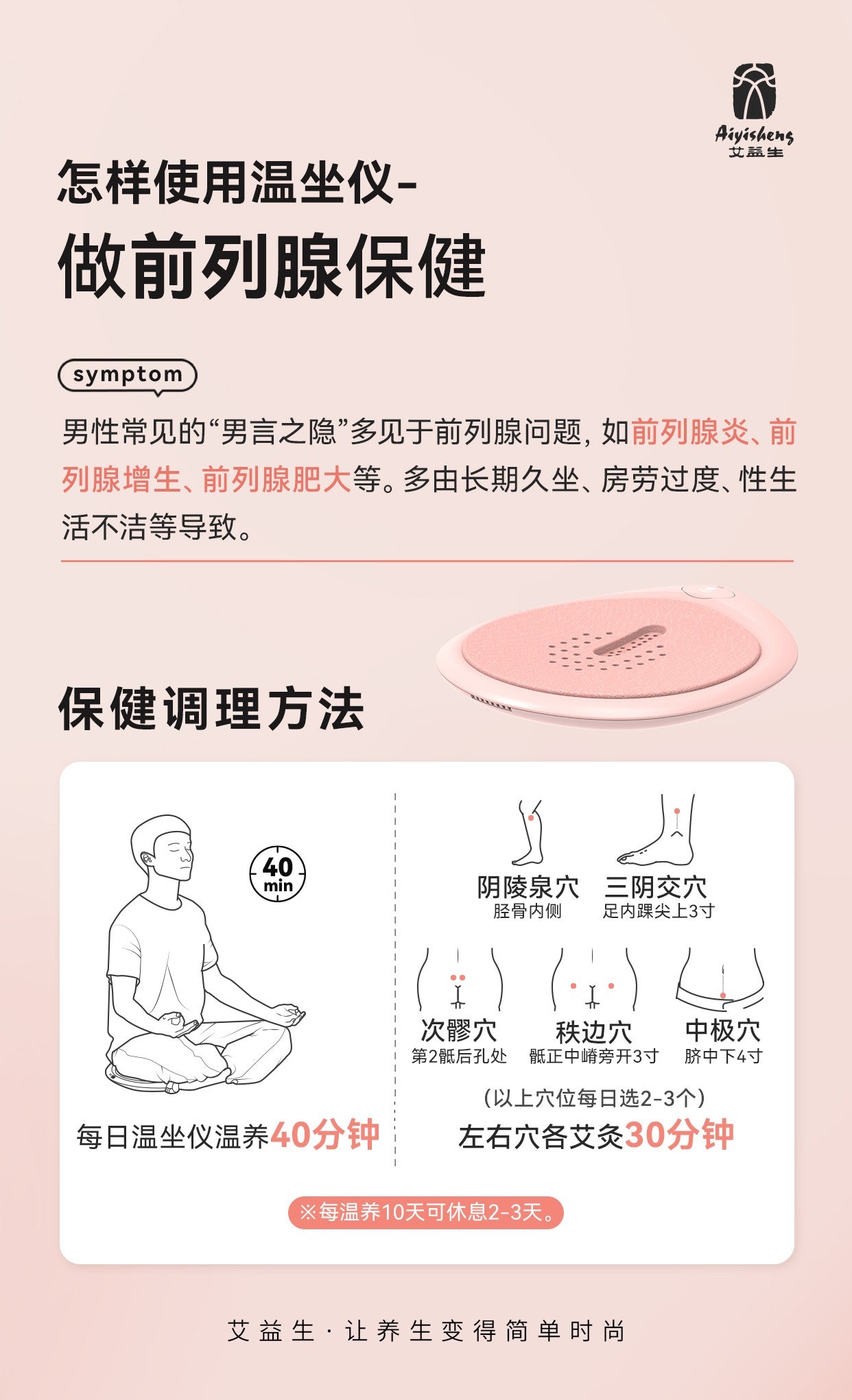
- Men with prostate concerns, lower urinary symptoms, or pelvic-floor tightness. The same acupoints are used in TCM for prostate and male reproductive health.
- Office workers sitting under aircon all day who feel cold in the lower body, fatigue, or have weak Kidney Qi.
- Frequent travellers or commuters who want moxibustion benefits without the bulk of a full moxa chair — the Seatpad fits in a backpack.
What's the difference between the Moxibustion Seatpad and the Multifunctional Moxibustion Chair?
Both are MoxaMoxa products that you sit on, but they serve different needs:
- Seatpad (SGD 602) — 4.5 cm thin, portable, focuses on Hui-Yin (CV1) and Chang-Qiang (GV1) perineal acupoints. Best for pelvic-floor, postpartum, fertility, and prostate concerns. Can be moved between chairs or used on calves and arms. The convenient, focused option.
- Multifunctional Chair (SGD 1,197) — covers three zones simultaneously (waist + Ba-Liao sacrum + perineum), in a permanent chair-style form factor. Best if you want comprehensive lower-body warming and don't need portability. The premium, three-zone option.
Many MoxaMoxa customers in Singapore start with the Seatpad and add the Chair later for home use.
What are the Hui-Yin and Chang-Qiang acupoints, and why does this pad target them?
- Hui-Yin (会阴, CV1) — perineum (between the genitals and anus). The first point of the Conception Vessel (Ren mai) and a key meeting point of the three Yin meridians. In TCM, warming Hui-Yin supports reproductive health, fertility, postpartum recovery, urinary function, and the root Qi of the body.
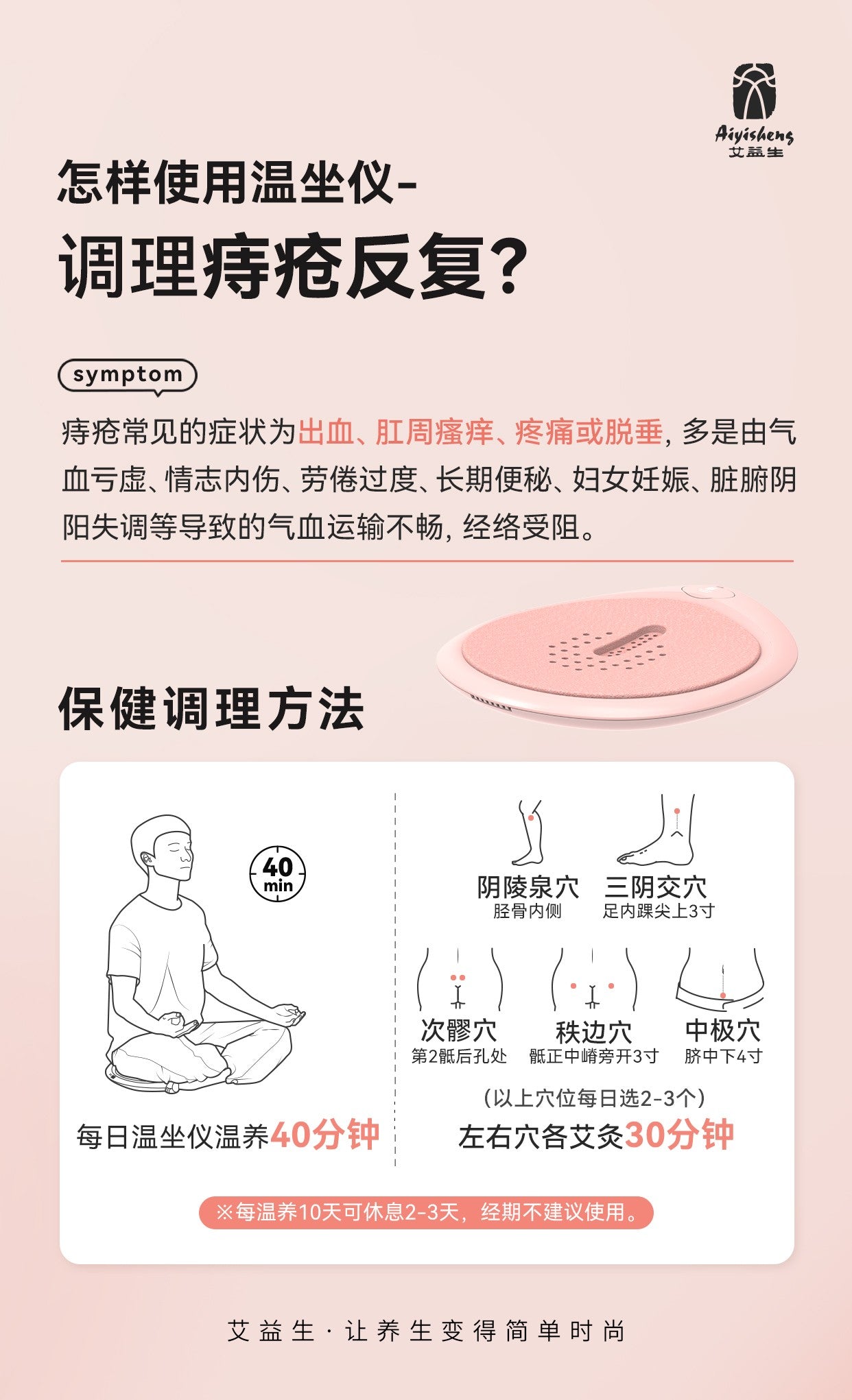
- Chang-Qiang (长强, GV1) — the tip of the coccyx. The first point of the Governing Vessel (Du mai). Used in TCM for haemorrhoids (in a non-active phase), tailbone discomfort, bowel function, and lower-back support.
These two acupoints together "open" the Ren and Du meridians at their root — which is why traditional TCM moxibustion for pelvic health always includes them. Most home heat cushions miss these points entirely.
Can I use the Seatpad after giving birth or for postpartum recovery?
Yes — postpartum perineal moxibustion is a classic TCM practice. Hui-Yin warming after delivery (typically after week 2–4, once active bleeding has stopped and the perineum is no longer inflamed) supports tissue healing, restores pelvic-floor tone, addresses postpartum cold-uterus syndrome, and helps with mood and energy. Always check with your TCM practitioner or doctor on timing — the first weeks postpartum have specific considerations. Avoid if you have stitches that haven't healed, active bleeding, or fever.
Does it help with fertility, pelvic-floor weakness, or prostate health?
In TCM, the Hui-Yin and Chang-Qiang acupoints are foundational for all of these. For fertility, warming the pelvic floor improves Qi and blood flow to the uterus and ovaries (or prostate, in men). For pelvic-floor weakness (postpartum, perimenopause, post-surgery), regular warming combined with Kegel exercises supports muscle tone. For prostate concerns, the warming effect addresses cold-stagnation patterns in TCM gynaecology/andrology. Results are gradual — 4–8 weeks of consistent 20-minute daily sessions usually show the most benefit.
How long and how often should I use it?
For general wellness, 20–30 minutes per session, 3–5 times a week. For active concerns (postpartum recovery, period cramps, fertility, prostate), daily use is common during the focus period. Best times are mid-morning or 1–2 hours before bed (using it right before sleep can be too stimulating for some). Start on the lowest heat setting for the first 2–3 sessions, drink warm water before and after, and don't use immediately after a heavy meal.
Can I use it on other body parts beyond sitting?
Yes — the Seatpad's slim profile makes it versatile. Common alternative uses:
- Under calves or behind knees — warms the Wei Zhong (BL40) and surrounding points for lower-back ache and circulation.
- On thighs — supports menstrual cramps when laid across the lower abdomen, or warms cold thigh fronts.
- Behind the lower back — lean against it on a sofa for Ming-Men (GV4) and Shen-Shu (BL23) warmth.
- Under the arms — warming the upper arms for general circulation and shoulder stiffness.
- On the abdomen while reclining — alternative use for cold-stomach digestive complaints.
How is the authentic Aiyisheng Moxibustion Seatpad different from cheaper alternatives on Taobao or Lazada?
Three big reasons we recommend buying the authentic Aiyisheng model from MoxaMoxa Singapore over budget or grey-market alternatives:
- High risk of low-quality counterfeits. The product photos look identical and the reviews often look fine — but the cushions shipped are frequently very different from the authentic Aiyisheng units. Cheaper foam, thinner heating elements, no real mugwort core, and inconsistent heat output. You only discover the difference after it stops working or simply doesn't deliver the meridian-warming effect you were promised.
- Generic heating, not acupoint-targeted. Cheaper heat cushions warm broadly with no positioning for Hui-Yin or Chang-Qiang. You get a warm seat, not a TCM tool.
- No real local support after purchase. The MoxaMoxa version comes with a 3-year local warranty, an English-speaking customer service team based in Singapore, hands-on training on correct positioning so you actually get the perineal acupoint heat where it matters, and a physical showroom in Singapore where you can try the Seatpad in person before deciding. If anything goes wrong, we're a WhatsApp away at +65 8961 9905 — not a returns form to an overseas seller in another timezone.
What's the price, colours, and where to buy in Singapore?
The MoxaMoxa Moxibustion Seatpad is available in White and Colour (Preorder) at SGD 602, sold exclusively by MoxaMoxa Singapore (moxamoxatcm.com). MoxaMoxa is the authorised Singapore distributor of Aiyisheng TCM equipment, with 3-year local warranty, English-speaking customer service, hands-on training, in-person showroom demos, and WhatsApp support at +65 8961 9905.
How do I clean and maintain the seatpad?
Wipe the seat surface with a soft, dry or lightly damp cloth after each session. The outer cover can be unzipped for spot-cleaning per the included instructions. Do not submerge any part in water. Air-dry fully before reassembly. Store in a cool, dry place. Mugwort heating elements should be replaced every 3–6 months of regular use as they lose potency. MoxaMoxa stocks replacement cartridges and can guide you through replacement via WhatsApp.
Taboos
Like all TCM moxibustion practices, the Moxibustion Seatpad has specific taboos (禁忌) — situations and conditions where it should be avoided or used only with professional guidance. Because the Seatpad heats the Hui-Yin and Chang-Qiang acupoints at the root of the Conception and Governing Vessels, the precautions below are especially important for women's and reproductive health.
Do NOT use the Moxibustion Seatpad if you are:
- Pregnant, in any trimester. Hui-Yin (CV1) is the opening point of the Conception Vessel — direct heat stimulation during pregnancy can disrupt the pregnancy. This is a strict contraindication in TCM.
- In your active menstrual bleeding (especially heavy days). Direct perineal heat can increase flow and prolong the period.
- Within 2 weeks postpartum, or before stitches/wounds heal. Wait for your obstetrician or TCM postpartum specialist to clear the perineum for heat therapy. Premature heat on inflamed tissue can worsen swelling and slow healing.
- Running a fever or recovering from an acute infection (cold, flu, COVID, UTI, prostatitis, vaginitis). Moxibustion is warming and tonifying — TCM theory says this can "trap" external pathogens inside the body and prolong illness.
- Recovering from recent pelvic, perineal, abdominal, or coccyx surgery. Wait until your surgeon clears you for heat therapy — typically 6–8 weeks post-op.
- Suffering from active inflamed haemorrhoids, anal fissures, or any open wound at the perineum/coccyx area. Heat can aggravate active inflammation. Use only after the acute phase has subsided.
- Diagnosed with a "heaty" TCM constitution (yin deficiency with heat signs). Signs include frequent dry mouth, night sweats, red tongue with little coating, hot palms and soles, irritability, insomnia. Adding heat to the root meridians can worsen these symptoms.
- Diagnosed with a pelvic or abdominal tumour, endometriosis with active flare, or undiagnosed pelvic pain. Get a diagnosis first.
- Fitted with a pelvic electronic implant, pacemaker, or IUD with diagnostic concerns. Consult your doctor first.
- Severely intoxicated, severely sleep-deprived, or unable to feel and respond to heat. Always be fully conscious during a session.
- A child under 12, unsupervised. The Seatpad is designed for adults.
Use with caution if you are:
- Trying to conceive in the second half of your cycle (after ovulation). Hui-Yin heat during the luteal phase can affect implantation in some women. Speak to your TCM fertility specialist about timing.
- On blood-thinning medication. Heat improves circulation, which is generally good, but start with shorter sessions if you bruise easily.
- Elderly with thin skin or reduced lower-body sensation. Start on the lowest heat. Have a family member check temperature periodically for the first few sessions.
- Just finished a heavy meal. Wait 30–45 minutes before use.
- Just exercised or showered. Wait 30 minutes — pores are open and body is already warm, which can lead to over-heating.
- Sensitive to hot flushes (perimenopause, menopause). Use the lowest heat setting and shorter sessions.
General TCM moxibustion taboos to keep in mind:
- Do not use in an air-conditioned room with the AC vent blowing directly on you. The contrast between warm Qi flow and cold draft causes Wind invasion (受风), leading to neck/shoulder stiffness, headache, or a chill.
- Do not drink ice-cold water or eat cold food immediately after a session. Cold food and drink will undo the warming benefit. Use warm or room-temperature water instead.
- Do not bathe in cold water within 1 hour of use. Wait at least 1–2 hours, and use warm water.
- Do not use for longer than the recommended 20–30 minutes per session. More is not better — over-use can "burn out" Yin energy, causing dry mouth, irritability, or insomnia.
- Do not use right before vigorous exercise. Moxibustion mobilises Qi internally; combining with intense activity can cause dizziness.
- Stop immediately if you feel dizzy, nauseous, or unusually fatigued during the session. Drink warm water, rest, and consult your TCM practitioner if symptoms persist.
When in doubt, consult a qualified TCM practitioner before starting regular use — especially if you are pregnant, trying to conceive, postpartum, on long-term medication, or unsure of your TCM body constitution.
Have questions about whether the Moxibustion Seatpad is right for your situation? WhatsApp our team at +65 8961 9905 — we're happy to help you decide before you buy, or visit our Singapore showroom to try the device in person.